Translate

Saturday, 29 September 2012


The Apple iPhone 5 review
 
The iPhone 5. As in five million units sold over the course of a … weekend. Can't say no to that. This is the latest installment in the smartphone series that changed the mobile phone industry and we can understand people couldn't wait. Now, what is it they couldn't wait for?

The Apple iPhone 5 brings the long anticipated larger screen and more capable internals that we already know are ready to trade blows with the most powerful chipsets out there.


There's also the new slender, slimmer body that no photos really do justice to. If all of Apple's claims are true then the iPhone 5 is a real engineering masterpiece - double the performance in a more compact package without sacrificing anything in terms of battery life.

They could've done worse. A lot worse. But this is Apple telling you to prepare to be wowed. So you have every right to play hard-to-please.

Key features
  • Quad-band GSM and quad-band 3G support with 14.4 Mbps HSDPA and 5.76 Mbps HSUPA
  • LTE support where carriers support it and CDMA support when sold by CDMA carriers
  • 4" 16M-color LED-backlit IPS TFT capacitive touchscreen of 640 x 1136px resolution
  • Scratch-resistant screen glass, fingerprint-resistant coating
  • 1.2GHz dual-core custom-designed CPU, PowerVR SGX543MP3 GPU, 1GB of RAM, Apple A6 SoC
  • iOS 6 and iCloud integration
  • 8 MP autofocus camera with LED flash and touch focus
  • 1080p video recording at 30fps
  • 1.2MP secondary front-facing camera
  • Wi-Fi 802.11b/g/n, Wi-Fi hotspot
  • GPS with A-GPS connectivity; digital compass
  • 16/32/64GB storage options
  • Accelerometer, proximity sensor and a three-axis gyro sensor
  • Active noise cancellation with a dedicated secondary microphone
  • Standard 3.5 mm audio jack, stereo Bluetooth v4.0
  • Excellent audio output quality (though worse than 4S)
  • Apple Maps with free voice-guided navigation in 56 countries
  • Voice recognition, Siri virtual assistant
  • Supports HD Voice (needs carrier support too)
  • FaceTime video calls over Wi-Fi and cellular
  • Impressively slim and light
  • Great battery life
  • Main disadvantages
  • Aluminum body looks cool but is easy to scratch
  • Proprietary connector, incompatible with previous-gen accessories (needs adapter)
  • The new display is not proportionally bigger, but only taller
  • Unadapted apps run letterboxed due to the unusual resolution
  • nano-SIM support only
  • Apple Maps app not up to scratch
  • No USB Mass Storage mode
  • No FM radio
  • No stereo speakers
  • No microSD card slot
  • No NFC connectivity (though that may be nitpicking)
  • Stuck with iTunes for loading content
  • Mono audio recording in videos
Main disadvantages
  • Aluminum body looks cool but is easy to scratch
  • Proprietary connector, incompatible with previous-gen accessories (needs adapter)
  • The new display is not proportionally bigger, but only taller
  • Unadapted apps run letterboxed due to the unusual resolution
  • nano-SIM support only
  • Apple Maps app not up to scratch
  • No USB Mass Storage mode
  • No FM radio
  • No stereo speakers
  • No microSD card slot
  • No NFC connectivity (though that may be nitpicking)
  • Stuck with iTunes for loading content
  • Mono audio recording in videos

Should the iPhone 5 be worried about not doing quite enough in terms of new design and features? That question sounds ridiculous considering the sales numbers. But there's a long-term perspective that goes beyond a record-breaking opening weekend.

People who thought the iPhone 4S was a half-hearted effort, are rightfully expecting the iPhone 5 to be the real upgrade of the brilliant iPhone 4. In the end, though, there's more to a smartphone's real worth than dry specs. Apple has, on multiple occasions, been able to produce devices that are better than the sum of their parts and few will be surprised at the iPhone 5 pulling off a similar trick.


Thursday, 27 September 2012

Meet the Sony Xperia Tablet S


Hello dear techies! meet the Sony Xperia Tablet S. It carries over some design elements from its predecessor, like the 9.4″ WXGA screen and fold-over design, but it adds goodies like a quad-core processor (moving from Tegra 2 to 3), thinner aluminum frame and IPX-4 certification (splash proof. yes! splash proof).


The Xperia Tablet S is 8.8mm thick along its back which is similar to the ipad2, with a thicker “fold” on top. This makes the tablet easier to hold in the hand and is used to attach the tablet to various accessories. it runs android 5.0 jelly bean OS.
there is a suede cover, which also serves as a stand (it can hold the tablet tilted at two different angles). It snaps into place and will hold the tablet upside down, but we wouldn’t shake it too hard. When you close it, you can use the elastic band to keep it shut.
The tablet is available in 16GB, 32GB and 64GB versions, but the 16GB one will probably be the most popular as there is an SD card slot. That’s right, not microSD, but a regular-sized SD card slot, meaning you can expand the storage on the cheap.


The Sony Xperia Tablet S really feels like something intended for home use with the Remote control app. It even comes with a Small app version, so you can always switch the channel.
Speaking of Small apps, they are floating apps that take up only a part of the screen and can be used along side regular apps.

Wednesday, 26 September 2012

Sony announces new slimmer and lighter PlayStation 3

Sony has announced yet another redesign to their popular PlayStation 3 console. Just like the last one that came out three years ago, this one cuts down on the size and weight by being 20% smaller and 25% lighter than the previous model.

 Internally, the new console seems to be pretty much identical to the old one, with no new announced changes. Only difference is that you now have 250GB and 500GB models, selling for $269.99 and $299.99 respectively. 


Both models come as part of a bundle. The 250GB model comes with ‘UNCHARTED 3: Drake’s Deception: Game of the Year Edition’ and a voucher for more than $30 worth of bonus digital content for ‘DUST 514′ and will be available starting September 25.
The 500GB model, meanwhile, comes with free 30-Day PlayStation Plus voucher and a copy of ‘Assassin’s Creed III’ and will release simultaneously with the game on October 30. The game will feature four exclusive levels available only on the PlayStation 3.


Monday, 24 September 2012

This Windows Phone8 concept smartphone looks super cool, but does a funny thing to the Windows button 

 Design is the one of the areas where we feel WP smartphones do pretty well. The Nokia Lumia 800 and 900 were considered by many (us included) as two of the best-looking handsets the industry has seen and virtually all of the recently announced WP8 handsets look equally as impressive. 


Yet when we saw the latest concept design posted on Yanko Design, we just fell in love with it. Inspired by the Windows Phone UI, the colorful handset is not only a great looker, but also really different from anything we have seen so far. just feed your eyes


 The only potential issue we see here is the relocated Windows button on the right side, which may or may not work in reality. Here’s to hoping that some of the Microsoft partners take an interest in the design and make it a reality, as we’d love to find out.

Thursday, 9 August 2012

7 amazing cell phone facts


1. Nokia manufactured paper in 1865


Nokia was founded back in 1865 and manufacturing paper was its primary business. Many years later, it switched to making rubber products, telegraph wires, and other electrical cables. During the middle of the last century, it also supplied the Finnish army with communications equipment, gas masks, plastics, and chemicals. Nokia's first mobile phones were released in the 1980s.


2. World's best-selling phone


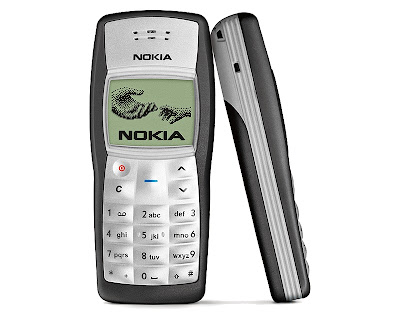
Over 250 million units of the Nokia 1100 and its variants have been sold worldwide since the device's introduction in 2003. The success of this basic phone is mostly due to its reliability and low price. In 2009, a rumor arose claiming that the Nokia 1100 had a software glitch, which could potentially allow fraudulent bank operations to be executed. As a result, prices of second-hand units being sold online skyrocketed to 5-digit numbers.

3. First photo sent from a phone

The first photo to be publicly-shared using a cell phone was taken on June 11, 1997 by Philippe Kahn (pictured). He shared photos from the maternity ward where his daughter Sophie was born. Philippe Kahn is credited for developing the first camera phone.

4. World's most expensive phone

The Stuart Hughes iPhone 4 Diamond Rose is the world's most expensive phone. Priced at £5,000,000 (about $7,850,000), its bezel is covered with about 500 diamonds totaling over 100 carats. The back is made out of rose gold, and the Apple logo is formed using 53 diamonds. There is a single cut 7.4 carat ping diamond on top of the home button. Only two of these will be made.


5. World's toughest phone


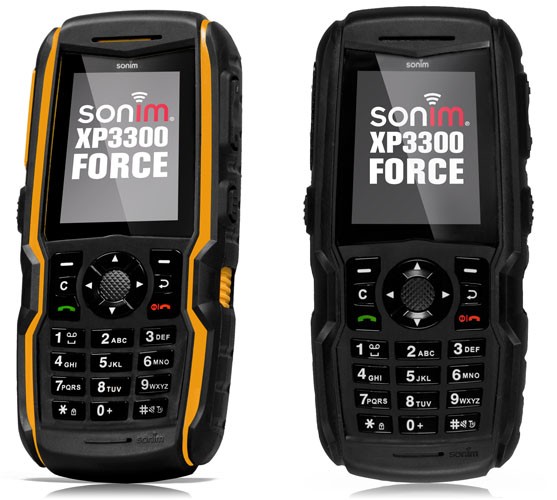
The Sonim XP3300 Force is recognized by the Guinness World Records as the world's toughest phone. It earned its title by surviving after an 84 feet (25 meters) drop on a layer of concrete without suffering any operational damage. In addition, it can be safely submerged in waste water down to two meters. And by the way, it almost blends.

6. World's first music phone


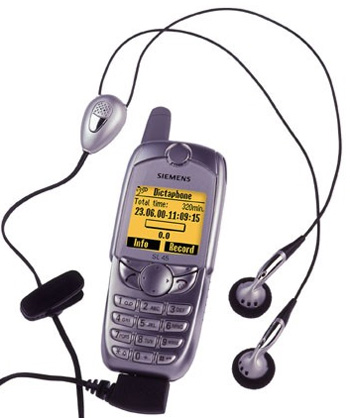
The Siemens SL45, released in 2001, was the world's first mobile phone with expandable memory and support for MP3 playback. It came with a 32MB (that's megabytes!) MMC card and stereo headphones included in the set. The cell phone could deliver 5 hours of music playback on a single charge.

7.Highest Global Text Messaging


The Philippines is ranked number one globally in usage of text messages with about 1.4 billion text messages being sent every day. During the late '90s and early 2000s, the country was known as the "text capital of the world". Text messages were free at first, but a charge was imposed once carriers noticed the service's popularity. Currently, sending a text message in the Philippines costs one peso, which is a little over two cents.

Wednesday, 6 June 2012


Audi e-bike: A bicycle that runs at 80 kmph 


Imagine a sophisticated bicycle that matches the speeds of a bike with just the press of a button. Well, your fantasy has now become a reality, thanks to an incredible new e-bike by auto manufacturer Audi.
The new Audi e-bike Worthersee, built on motor racing design principles, has every possible gadget that you could ever need - just like a Formula 1 car.


Perhaps the most helpful feature is an electric motor to help rest those tired legs of the rider. But this isn't just any electric motor, it can help build speeds up to 80 km per hour, the Daily Mail reported.
According to its developers, a cyclist can choose between a total of five modes, including the pure muscle power mode, the electric motor alone, or pedalling supported by the motor.
In the "Pure" mode, the drive power is purely the product of the cyclist's legs, while in "Pedelec" mode you are aided by the electric motor that then makes speeds of up to 50 mph.
If you select "eGrip", the Audi e-bike Worthersee runs solely on the electric motor and can reach a top speed of 31 mph. The cyclist then controls forward momentum using a gripshift and can configure the power as desired using the touchscreen on-bike computer.
The cyclist can also hook up to the computer using a smartphone. For those looking to record tricks, video images recorded via the in-helmet camera can be uploaded to the Internet in real time via your smartphone. Facebook status reports also pop up on the Audi e-bike Worthersee display.


 Different modes can be set using a smartphone or directly on the e-bike - either "Power Wheelie" mode, with adjustable wheelie angle for less skilled bikers or "Balanced Wheelie" mode for sporting challenges.
It's also fitted with homogeneous LED light strips that create the immediately recognisable Audi light signature.
"When developing the Audi e-bike Worthersee we drew on motor racing design principles for inspiration," said Hendrik Schaefers, one of the designers of the e-bike.


"The e-bike appears incredibly precise, highly emotional and strictly functional. Indeed, the design effort focused on its function as a sports machine. All design elements are thus firmly aligned to the technical features."
As we all know Audi is always doing it big.


Monday, 4 June 2012


Lenovo ideaPad Yoga


Lenovo's IdeaPad Yoga is one of the more intriguing products to be announced this year.

The Yoga is a hybrid device and named because of its flexible nature. Rather than following the example of Asus' Transformer Prime - a tablet which plugs into a keyboard dock to make it a laptop, the IdeaPad Yoga is a laptop with a touchscreen which folds into a tablet.
Lenovo has designed the device to be used in four different usage modes or positions called notebook, tablet, tent and stand. The first is a traditional laptop with a keyboard, trackpad and screen. You can then fold the screen all the way over to turn it into a tablet. The third mode involves positioning the device in a triangular tent-like fashion on a flat surface. Lastly you can have the keyboard facing the supporting surface and angle the screen as desired.
The innovation and creativity for the IdeaPad Yoga is superb. The way it folds into different shapes certainly means it will adapt to different situations well. For example, the keyboard and trackpad are automatically disabled when using the Yoga in certain modes.


It is quite big and heavy at 16.9mm and 1.47kg to use a handheld tablet for any length of time but that's the nature of a hybrid device like this.
The IdeaPad Yoga has a 13.3-inch touchscreen with a resolution of 1600 x 900 and runs on Microsoft's Windows 8 operating system. Windows 8 is simply the perfect match for the Yoga and its hybrid nature utilising the touchscreen, keyboard and trackpad.
One downside to the Yoga is the hefty price tag which Lenovo recently announced as £1,200.


The IdeaPad Yoga is designed with Windows 8 in mind, and should ship right around the launch of Microsoft's new OS, likely in the second half of this year. There are no official specs yet, but it will use Intel's next-generation (Ivy Bridge) processors.
The aluminum construction and general shape and size are similar, though Lenovo has replaced the wrist rest with textured plastic that has a "leather-like" feel to it. The display has obviously changed as well, as the Yoga sports a capacitive touchscreen with 10-point multitouch. It's also loaded with 
the sensors you'd expect in a tablet, like GPS, gyroscope, and accelerometer.


 Despite the cool concept, I have my doubts. with the keyboard on the back. How long will the keys last when people just jam the thing into their bag in tablet mode every day? Do people value a laptop that can turn into a tablet enough to live with a tablet that is comparatively thick and heavy.

lenovo seems to have something big coming before the end of this year.


Saturday, 2 June 2012

Waterproof Sony Xperia acro S poised to make a "splash in HD" with 12MP camera and 720pixels display


Sony seems to be taking the waterproof trend outside of Japan for its handsets, announcing the Xperia acro S today. The specs seem to jibe with the Japan-only Xperia acro HD that was unveiled recently - a 12MP Exmor R camera capable of 1080p video, 1.5GHz dual-core processor with 1GB of RAM, 16GB of internal memory, and a 4.3" HD Reality Display.


Besides the top shelf specs its main virtues are, of course, the IP55 and IP57 ratings for dust and water resistance, meaning you can dip it in up to three feet of water for up to 30 minutes or play frisbee on the beach with it without worrying that sand and liquid will damage the internals.


The handset is chubbier and heftier than even the Xperia S, with its 0.47" (11.9mm) thickness and 5.18oz (147g) of weight, but all that weatherproofing must come with some price. Just like the Xperia go announced today, it has the "wet finger tracking" tech that allows you to operate the capacitive touchscreen even when your digits are dripping with salty water, and that's enough to make it stand out.


It sports a fairly generous sealed 1910mAh battery, can stream media to your DLNA gear sans cables, and has an NFC chip for mobile payments and Sony SmartTag-ing. The TV Launcher app that works as a remote for Sony's smart BRAVIA TVs is present as well.


Sony says that the Xperia acro HD will be available globally in the third quarter in the press release, so we keep our hopes high to see it on GSM carriers, as that's the radio inside. It will be available in white, black and the pink you see in the slideshow below.

Thankfully, the phone will launch with Android Ice Cream Sandwich out of the box, and have a microSD slot for storage expansion.

source : sony

Saturday, 12 May 2012


The HP Pavilion M6

 
Hello people!!! i present to you the HP M6.


HP today unveiled the HP Pavilion m6 notebook PC that includes enhanced features and reflect the company's new HP Mosaic design approach.
For stylish on-the-go computing, the HP Pavilion m6 is the ideal balance of mobility, performance and entertainment wrapped in a sleek, brushed silver aluminum design.
The new HP Mosaic design approach, reflected in its new HP Pavilion notebooks, is an extension of the company's MUSE (materials, usability, sensory appeal and experience) design philosophy.
The Mosaic design fuses together the multifaceted elements of MUSE, including rich colors, premium materials and purposeful shapes, to form one comprehensive design language that spans the consumer notebook portfolio. Similar to a mosaic art piece, each HP notebook series represents a small piece of the canvas that, when combined, builds into a beautiful picture of the HP product family.
"Featuring precise lines and tapered profiles, the new HP Pavilion notebook portfolio evokes dynamic energy and movement," said Stacy Wolff, vice president, Design, Personal Systems Group, HP. "These notebooks utilise premium materials that are rich to the eye and to the touch, delivering unique sensory experiences."


HP Pavilion m6-sized for life on the go
With a large display packed into a super-slim design, the HP Pavilion m6 is the notebook users will want with them all day. Movies and games come to life on the 39.6cm (15.6") LED backlit high-definition (HD) BrightView display, and rich audio is made possible with Beats AudioTM, dual speakers and subwoofer.
The brushed-aluminum or black finished HP Pavilion m6 can achieve up to eight hours of battery life and features the latest Intel and AMD processors, an optional backlit keyboard and discrete graphics for running the most demanding tasks without pauses or interruptions.
The HP Pavilion m6 is also loaded with HP innovations. HP CoolSense technology automatically adjusts performance and internal fan settings for a noticeably cooler PC, and HP ProtectSmart locks the hard drive to protect photos, music and memories in case the notebook is accidentally dropped. Optional HP SimplePass remembers passwords and provides easy access to online accounts with the swipe of a finger, and the HP TrueVision HD Webcam provides brighter and cleaner HD images.

Pricing and availability
HP Pavilion m6 is expected to be available end of July with a starting price of £600 (968 USD).


Tuesday, 8 May 2012


Sony Xperia S

Say hello to the Sony Xperia S. Sony is the new brand name for Xperia mobile phones, now that the Ericsson name has been dropped from the line. The Xperia S is the downsized firm's new flagship 
Android smartphone.

Xperia S: Design
Rectangular is the watchword for the predominant style of the Xperia S with square edges but a curved rear. The smartphone isn't remarkably thin or light at 10.6mm and 144g 
The highlight of the design is the transparent strip of plastic along the phone’s bottom, with its own white backlight. This strip contains the Back, Home and Menu symbols in a stylish way but does present a problem. It feels natural to tap the icons but the actual buttons are above and only shown by small white dots. Worse is the fact that these buttons can be very unresponsive at times. 
A plastic rear cover is removable, providing access to a Micro-SIM card slot. However, the battery is not removable and there’s no microSD expansion slot. Sony has provided 32GB of internal flash storage, but that should be enough memory for a phone though. Xperia S is available in black and white colour - both styles look quite sleek.
The handset is solid and has a durable feel but is let down by the thin and flimsy removable rear cover. The overall effect would have been better if the Micro-SIM card slot was side mounted to leave the case in one piece.
In general Sony has equipped the Xperia S with a solid line-up of hardware. It is the processor which doesn’t quite stack up with the competition on paper, though. Many Google smartphones launched this year have a quad-core chip but the Xperia S takes a 1.5GHz Qualcomm dual-core processor. This is accompanied by the current standard 1GB of RAM.
The display is perhaps the best feature of the Xperia S. At 4.3in, it strikes a good balance between being large but manageable. It’s said to use Sony's Mobile Bravia Engine (a 19-page white paper fails to substantiate what that means) and has an impressive 720 x 1280-pixel resolution. This means it has one of the highest pixel densities we've seen on a smartphone at a whopping 341ppi - higher than even the iPhone 4S' 326ppi.The screen is up there with the best, competing with the iPhone 4S and HTC One X.
Other hardware features include dual-band Wi-Fi, Bluetooth, microUSB, Micro HDMI and a near-field communications (NFC) chip.


Xperia S: Camera
Sony Ericsson was once renowned for making phones with good-quality cameras and Sony has maintained this trend with the Xperia S.
The device has a 12.1Mp rear-facing camera with auto-focus and LED flash. It has Sony’s Exmor R CMOS sensor, 16x digital zoom and an F2.4 aperture.

The camera app runs well and can be launched easily by pressing the dedicated shutter button - from sleep you can launch the app and take a photo in about two seconds. The auto-detect scene feature knows if you're shooting a portrait or macro shot for example and is a nice time saver.
Images were brilliantly sharp and we were particularly impressed with macro shots. The camera can automatically create a panoramic image using the 3D Sweep Panorama feature as you sweep the phone. It can record video in full-HD 1080p.
The Xperia S’ front-facing camera is for video chats or taking self-portrait pictures. This 1.3Mp cam is situated nicely on the phone and delivers a reasonably clear image.


Xperia S: Software
The Xperia S packs Google's Android 2.3 (Gingerbread) operating system. We were told the handset is due to get an upgrade to Android 4.0 (Ice Cream Sandwich) but this didn't stop us wondering why a phone launched in spring 2012 is pre-loaded with an OS that was officially superceded in October of 2011.
It also remains to be seen how well a 1.5GHz dual-core processor will run Android 4.0 as reports have suggested some Android phones struggle with the more demanding software.
However, there are far too many apps pre-installed on the Xperia S; more than three pages worth to be exact.that's much apps to come with a phone. Crucially, most of these cannot be uninstalled.

Xperia S: Battery life
Sony doesn’t specify the energy capacity of the internal battery but touts a life of 25 hours listening to music, six and a half hours video playback, or eight and half hours of talk time.
Clever use of an included Power Saver app may help you get more out of the battery life. A power-saving mode can be customised to switch off certain useful functions or dim the screen. It can also automatically be enabled at a user-defined battery level or between certain hours of the day.